Perfectionism: Your Secret Weapon or Silent Saboteur?


Hi Reader,

Calling all perfectionists in the house!

For so many athletes, perfectionism feels like both a blessing and a curse. It’s what gets you out of bed for those early morning workouts. It’s what pushes you to dig deep when your legs are screaming to stop.

It has a lot of different forms, and has created some interesting debates in the sport psychology world (good? bad? both?), but if there's anything I've learned, it's definitely a personality trait that you can't simply turn off.

No one ever says, "I'm feeling perfectionistic today."

So telling someone to lower their standards, not be so hard on themselves, or not take things so seriously? Eh. Typically not helpful.

Yet we know perfectionism has a dark side. So what do we do about it?

Here's how I approach it:

When your self-worth is tied to your performance (i.e., when every missed workout, every “off” day, every less-than-perfect result feels like a personal failure), THAT'S when perfectionism becomes an issue.

It’s not just about the physical toll, it’s the mental and emotional weight that can leave you feeling burned out, anxious, and questioning why you even started in the first place.

The key is to rework your relationship with achievement and success by focusing instead on the process and what you want out of sport (and life), rather than how you compare to others, what others will think of you, or whether you measure up.

Here’s how:

1️⃣ Shift from perfection to excellence.
Perfection says, “Anything less than flawless is failure.”
Excellence says, “I’ll do my best today, knowing progress isn’t always linear.”

2️⃣ Practice self-compassion.
When you miss a goal or make a mistake, treat yourself like you’d treat a teammate. With kindness, not criticism.

3️⃣ Reframe mistakes as data.
A missed interval isn’t a reflection of your worth—it’s simply feedback. Use it to learn, adjust, and grow.

4️⃣ Broaden your identity.
You’re not just an athlete. You’re a whole, complex human being with so much more to offer than your results.

5️⃣ Set boundaries with comparison.
Unfollow social media accounts that make you feel “less than.” Reconnect with your reasons for doing this sport.

These shifts aren’t easy, but they’re worth it, because life is a wild ride and we might as well enjoy the process of continued learning, unlearning, and growth.

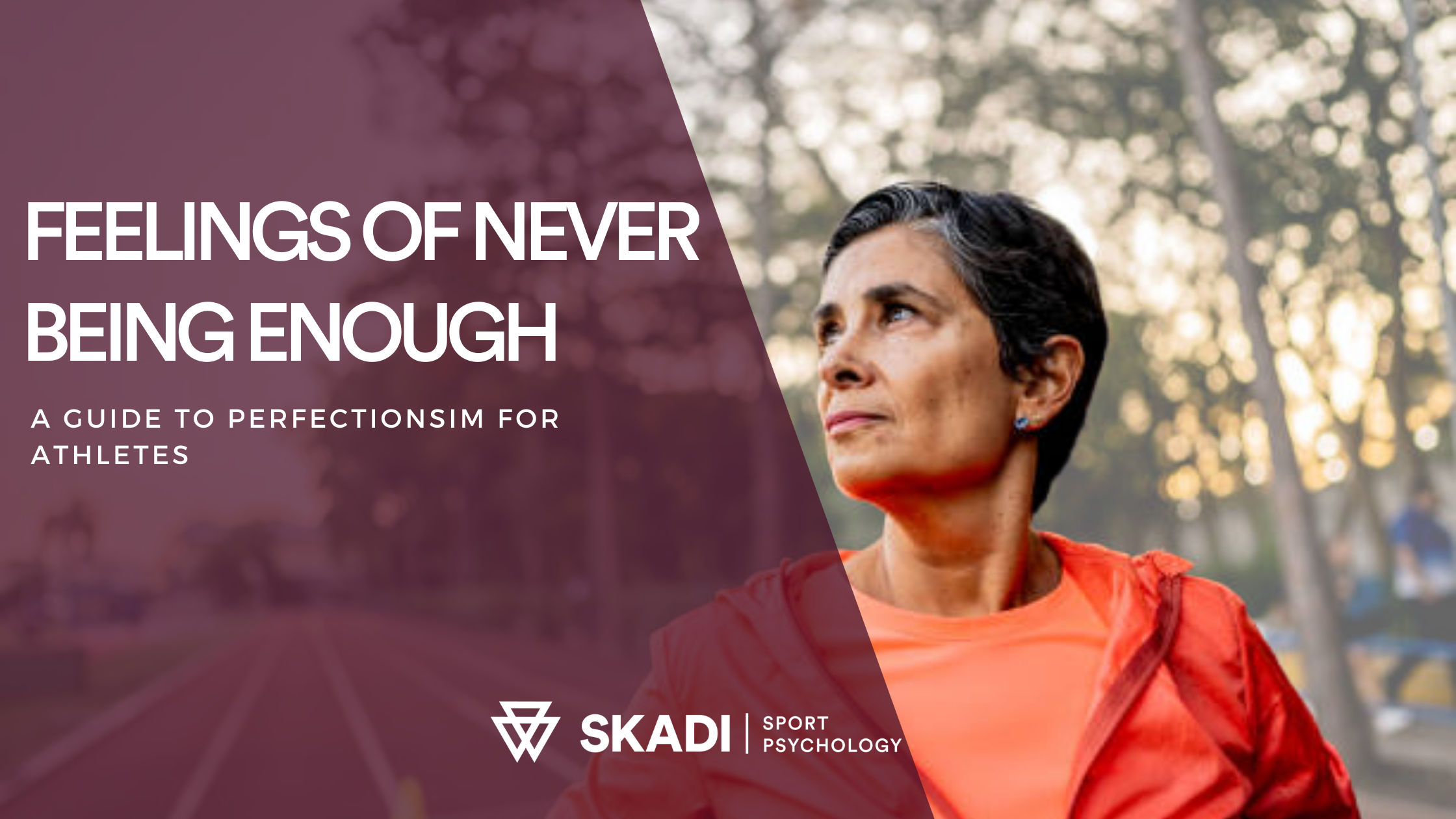
If this resonates with you, we dive deeper into this topic in our latest blog post: The Weight of Never Being Enough: A Guide to Perfectionism for Athletes


🎙️This week on the Feisty Women’s Performance Podcast...

Join us as Dr. Stephanie Mundt dives deep into the VERY cool topic of bone health for female athletes. If you ever want to nerd out over bones, Dr. Mundt is the one to learn from. During this conversation, she unpacks why understanding bone stress injuries is essential, especially for endurance athletes, and provides actionable strategies for prevention and recovery. Don’t miss this episode—it's a good one!

Til next time,
Dr. A

Ready to strengthen your mindset and perform at your best?
Explore our mental health therapy and performance coaching services —and book a free consultation to get started today.

Skadi Sport Psychology

Sign up to be the first to find out about new blog posts, podcasts, research opportunities, publications, and more.

Read more from Skadi Sport Psychology
Self Compassion for Athletes how to navigate negative self-talk

Hi Reader,You know that voice in your head after a bad race, a missed shot, or a tough training session?The one that says: "You’re not good enough." "You’ll never make it." "Everyone else is better than you." Yeah, that one. It’s brutal, isn’t it?If you’ve ever caught yourself spiraling into harsh self-criticism, you’re not alone. Negative self-talk is one of the most common mental barriers athletes face.And here's the weird part. The inner critic is not making you better. It’s holding you...

Calling All High School coaches! Is Your Team Culture Helping or Hurting?

Hi Reader,Let’s be real—coaching high school athletes is about so much more than training plans and race-day strategies.It’s about those moments that keep you up at night. Like when your top athlete pulls out of a race with a “stomachache” that’s really about anxiety. Or when you overhear a joke and wonder if your team culture is unintentionally pushing athletes away.Sound familiar? Your role as a coach goes far beyond teaching technical skills or improving race times. You’re shaping the...

Digital wellness and doing it for the 'gram': social media and athlete wellness

Hi Reader,Let’s talk about something that’s been on my mind lately (& on the minds of many of you, likely): social media.It’s a love-hate relationship, isn’t it?On one hand, it’s great to connect with teammates, share your wins, and find inspiration from other athletes. I love the sense of community I get from it, and the opportunity to connect with others regarding my random adventures. I've even done a surprising amount of networking on Instagram. (It's how I found some of you!)On the other...